
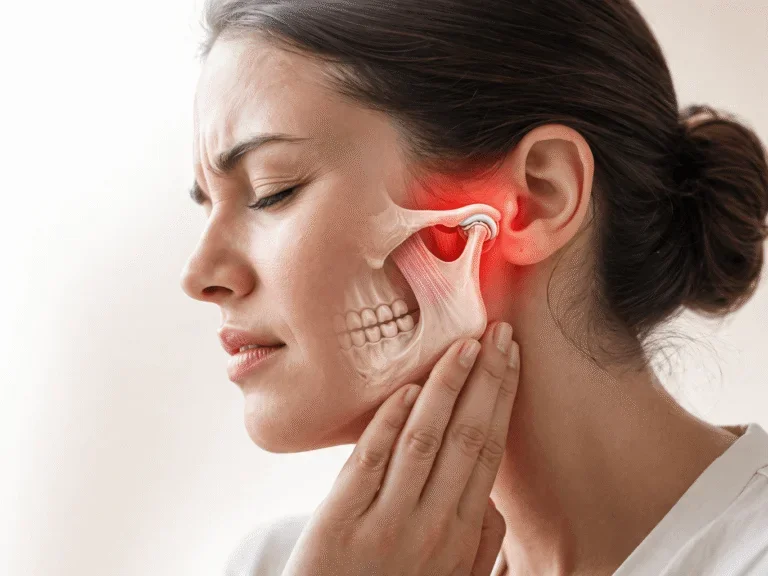
What Is TMJ Disorder (TMJD)?
The temporomandibular joints (TMJs) connect your lower jaw to your skull, allowing you to speak, chew, and move your mouth comfortably. Temporomandibular disorders (TMDs) are conditions affecting these joints and the surrounding muscles, often causing pain, stiffness, or difficulty moving the jaw.
TMD can develop from several contributing factors, including jaw injuries, arthritis, and other conditions affecting the muscles or joints. In many cases, the exact cause is unclear. Symptoms can range from occasional discomfort to persistent pain that interferes with eating, speaking, and everyday activities.
At TMJ Sleep Ohio, we evaluate jaw function and symptoms to help identify appropriate treatment options, including custom-fabricated occlusal orthotic appliances for certain patients.
COMMON SIGNS & SYMPTOMS:
Jaw Pain or Tenderness
Frequent Headaches
Pain Around the Ears
Jaw Locking or Stiffness
Painful Clicking or Popping
Discomfort While Chewing
Occasional painless jaw clicking is common and doesn't necessarily indicate a disorder requiring treatment.
TMJ DISORDER: VIDEO RESOURCES
Understanding TMJ Disorders
See how displacement of the cushioning disc within the jaw joint can affect its movement and sometimes contribute to clicking, pain, or locking.
Explore how degenerative changes can affect the structures of the jaw joint and contribute to discomfort or limitations in jaw movement.
TMJ Disc Displacement
Learn how the temporomandibular joint works and how problems affecting the joint and surrounding muscles can lead to pain and restricted movement.